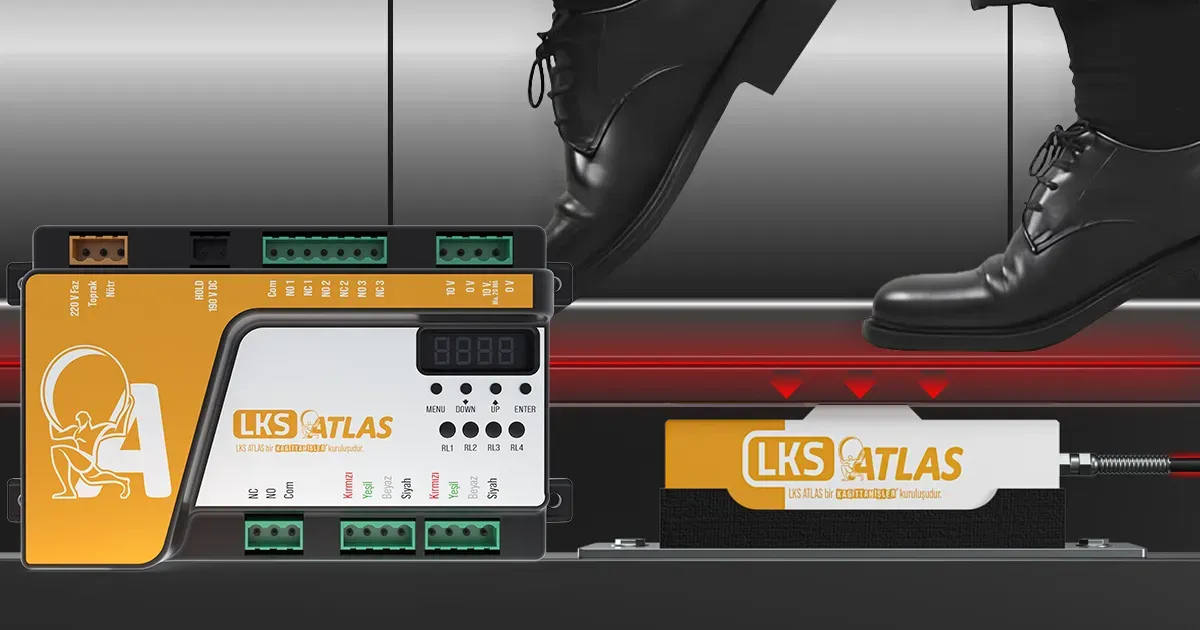
When you get on an elevator in apartment buildings, business centers, or shopping malls, you may have noticed that when there are more people or more weight than the cabin capacity, the elevator does not move and gives an audible warning. It does not close the cabin doors and maintains safe mode until some of the passengers get off. So, what is the mechanism that understands the elevator is "heavier than it can carry" at that moment?
The name of this system is the elevator overload system (commonly known in the industry as the overload system). Let's dive deep into what this smart system is, which protects both the mechanical life of modern elevators and passenger safety, and how it works.
What is an Elevator Overload System?
An elevator overload system is an electronic safety device that measures the total load (people, goods, freight, etc.) entering the elevator cabin with millimetric precision, compares this weight value with the legal carrying capacity of the elevator, and prevents the elevator from moving when the limit is exceeded.
In past years, while elevators measured load roughly with mechanical spring mechanisms, much more precise measurements are carried out today thanks to digital processors and advanced sensors. The system not only prevents accidents; it also prevents the motor, ropes, and brake systems from wearing out due to strain under excessive load.
How Does an Elevator Overload System Work?
The operating logic of the system is based on the principle of converting the micro-level flexing of metals under weight into electrical signals. The process basically takes place in these 3 steps:
- Sensing the Weight (Load Cell): As the load is placed on the cabin, sensitive sensors called Load Cells, located on the cabin floor, rope connection points, or chassis, are exposed to pressure. This pressure changes the resistance values inside the sensor.
- Processing the Signal (Calibration Device): The weak electrical signals coming from the load cells are transmitted to the control unit (brain) of the overload system. This unit digitizes the signals and converts them into a pre-calibrated weight value in kilograms (kg).
- Sending Commands to the Control Panel: If the measured weight exceeds the maximum carrying limit of the cabin (for example, 630 kg), the relays on the control unit are triggered. With this triggering, an "Overload" signal is sent to the main control panel of the elevator. The panel prevents the motor from moving, activates the audio/visual warnings inside the cabin, and keeps the doors open.
Benefits of Precise Measurement for Elevator Mechanics
A properly functioning overload system is not just a safety tool. It is also a hidden savings mechanism that reduces the operating costs of the building:
- Motor Protection: It prevents the elevator motor from burning out by drawing current above its capacity.
- Rope and Pulley Life: It prevents the stretching of carrier ropes and premature wear of pulley gears.
- Brake Safety: It guarantees that the brakes (parachute brake system) can safely stop the cabin in a possible emergency.

Digital Precision and Trust: Liftkeys Atlas
If you are looking for measurement accuracy and zero error tolerance in your elevator projects, you need to go beyond traditional measurement methods. As Liftkeys, we produce advanced technology solutions for you to provide flawless weight control in your elevators.
You can take the departure safety of your elevators to the highest level by examining our Atlas Overload System model, which stands out with its advanced digital calibration features, easy installation infrastructure, and stable measurement algorithm. Atlas brings the precise load management that modern elevators need completely to your buildings.
Frequently Asked Questions (FAQ)
- Why does the elevator overload system give an error (overload) in an empty cabin? This situation is usually caused by the deterioration of the system's calibration, the loosening of the mounting screws of the load cells (load cell), or a short circuit in the sensor cables. The device may need to be reset (zero calibration).
- Where is the overload sensor mounted on the elevator? It varies according to the design of the elevator. There are different load cell models mounted under the cabin (under the floor insulation rubbers), at the rope termination points (rope type), or directly under the chassis in the machine room.
- What happens if there is no overload system in an elevator? When an elevator without an overload system or with one that does not work is loaded beyond its carrying capacity, its motor can be strained and burn out, its ropes can slip, and most dangerously, it can cause accidents due to braking weakness by failing to stop at floor level. Furthermore, this situation is a direct cause for a red label.
