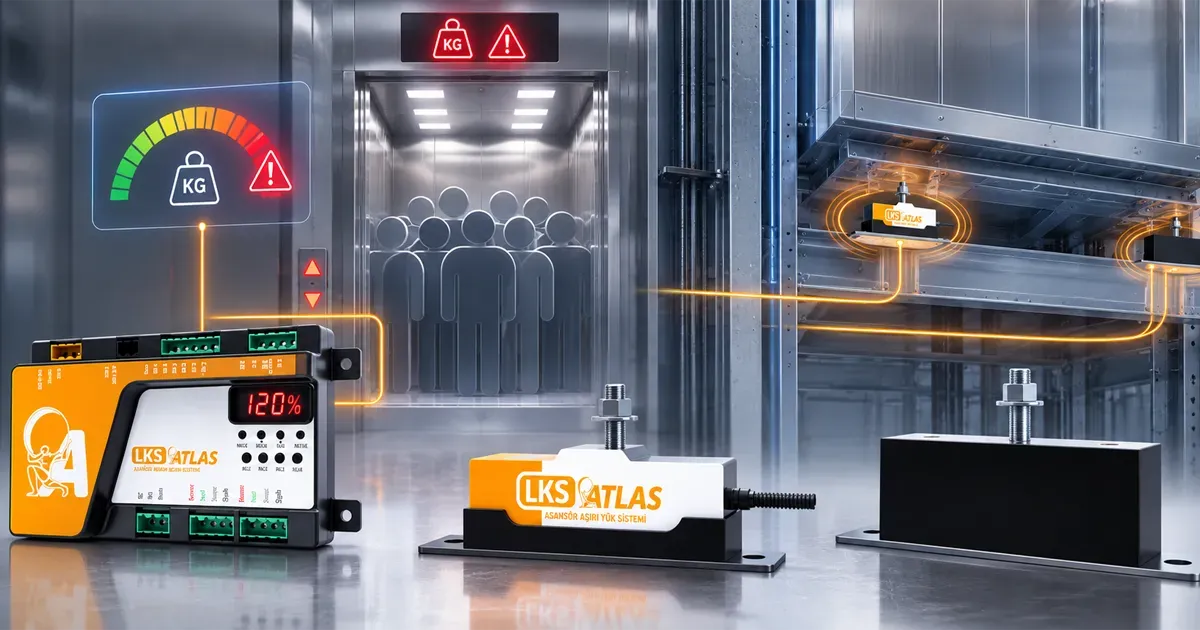
The hidden power behind the system that provides overload control in an elevator is the sensors that physically sense the weight. In the industry, these sensors are called elevator load cells or widely known by their English name Load Cells. No matter how advanced the overload control device is, it can only measure as accurately as the precision of the data coming from the load cell.
The types of load cells used vary depending on the architectural structure of the elevator, the suspension type (1:1, 2:1, etc.), and whether it is a modernization or a new installation. In this article, we will examine the basic types of load cells used in the elevator industry, their advantages, and which one you should choose for which project.
1. Under-Cabin Load Cells (Floor Sensors)
Under-cabin load cells are placed directly between the bottom plate of the elevator cabin and the load-bearing frame (chassis). They are usually mounted right next to or in place of the rubber isolation pads beneath the cabin.
- How Does It Work?: The weight of the passengers entering the cabin applies direct pressure to the floor. This pressure is equally shared and measured by 2, 4, or more sensors under the floor.
- Advantages: This system provides the most accurate and clear weight measurement. It is not affected by rope stretching or friction. Its zeroing (tare) is extremely stable.
- Disadvantages: It is difficult to retrofit onto an existing operational elevator, as it requires separating the cabin from the frame or lifting it up. It is ideal for new installation projects.
2. Rope-Type Load Cells
Rope-type load cells, which are indispensable especially for modernization (revamping) projects and fast installation, are mounted by clamping onto the elevator's load-bearing steel ropes.
- How Does It Work?: As load is added to the cabin, the tension in the ropes increases. The rope-type sensor calculates the weight by measuring this tension and the micro-level flattening tendency of the rope.
- Advantages: Installation is incredibly easy and fast. It can be installed within minutes just by tightening a few bolts, without moving the cabin. It is the most economical method for equipping older elevators with an overload system.
- Disadvantages: Millimetric deviations may occur over time due to rope stretching, lubrication, or movement over the traction sheave. Therefore, it might not be the primary choice for high-rise skyscraper elevators requiring extreme precision.
3. Frame and Under-Machine Load Cells
These sensors are placed directly under the elevator motor or machine frame. They are typically applied to fixed frame points at the top of the shaft in hydraulic elevators or machine-room-less (MRL) systems.
- How Does It Work?: It holistically measures the total weight of the entire elevator system (cabin + ropes + passengers) through the machine frame.
- Advantages: It has no physical contact with the cabin or rope mechanism. It is mechanically very long-lasting and is the load cell type least affected by external factors.
- Disadvantages: Since the self-weight of the system (dead load) is very high, it requires using high-resolution and premium-quality sensors to detect small weight variations introduced by passengers.
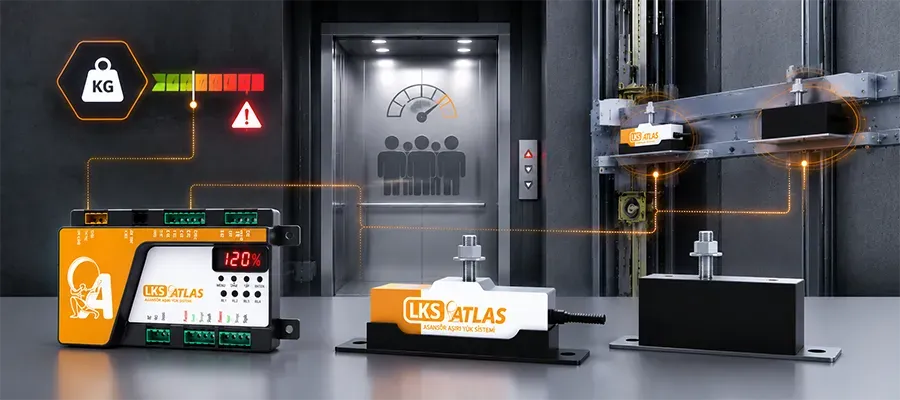
Flawless Compatibility with All Sensor Types: Liftkeys Atlas
Different projects may mandate different sensor topologies. As an elevator company, searching for a separate control device for each project is both costly and operationally exhausting.
The Atlas Overload System we developed at Liftkeys features a smart microprocessor architecture that works 100% compatibly with all under-cabin, rope-type, and frame-type elevator load cell models thanks to its universal structure. Atlas's advanced digital filtering and smart calibration software reduce all on-site measurement deviations and noise to zero, regardless of the chosen load cell type, consistently transmitting the most accurate kilogram information to the control panel.
Frequently Asked Questions (FAQ)
- How many ropes should a rope-type load cell be installed on?
It varies depending on the elevator's suspension type and load distribution. Generally, a single block sensor (rope group sensor) measuring the combined tension of all ropes can be used, or combined sensors installed individually for each rope are also available.
- What is the lifespan of load cells?
High-quality load cells can operate smoothly for the lifespan of the elevator (10-15 years), provided they are not subjected to extreme impacts or high-voltage shocks. However, it is recommended to check the calibration settings once a year over time.
- Does choosing the wrong load cell cause issues during inspections?
The type of sensor itself is not a direct reason for rejection during inspection. What matters is whether the selected sensor transmits the overload in the cabin (weight 10% over capacity) to the control panel accurately and in a timely manner. Any load cell that successfully passes the test can receive a green tag.
