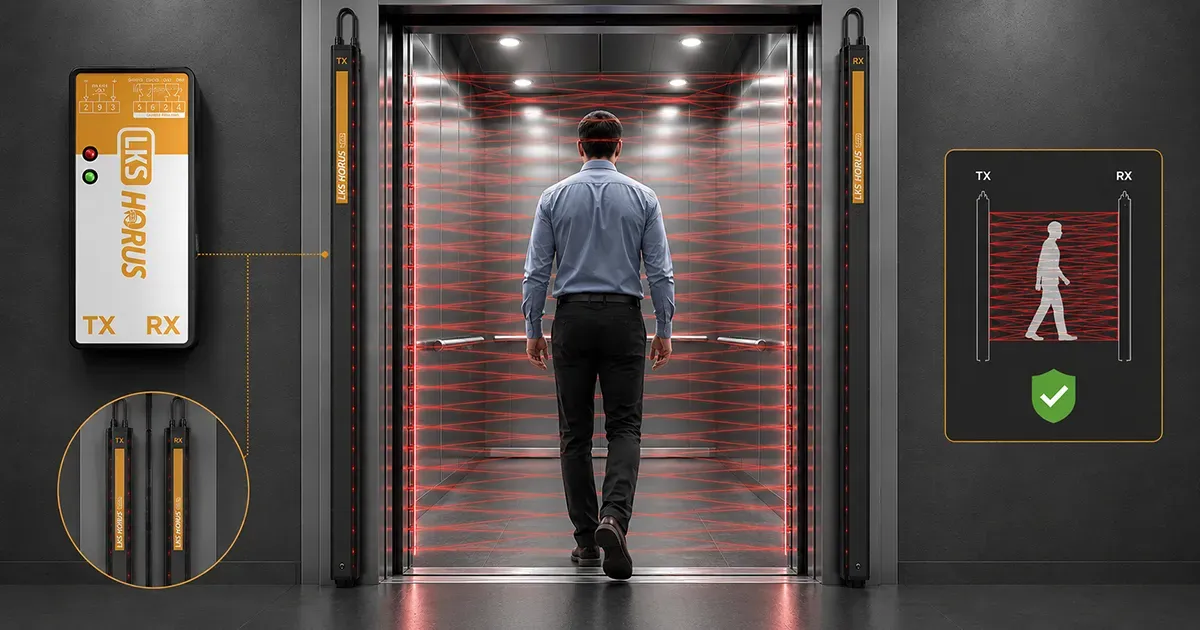
In modern elevator systems, the most critical link in passenger safety is the light curtains that monitor the closing movement of the doors. So, how does this system, which we technically call a "photocell", create a security wall in our elevators?
What is a Photocell (Door Security Sensor)?
An elevator photocell is an optical safety sensor that creates a "barrier" by emitting infrared rays on the closing axis of the doors. This system, which is connected to the door motor, cuts off the beam flow when any obstacle (passenger, pet, wheelchair, or suitcase) gets in the way, preventing the elevator from moving and preventing accidents.
Why Should We Use Light Curtains?
While older generation sensors only trigger at a certain height, modern systems like the LKS Horus Light Curtain provide protection along the entire height of the door thanks to their structure with 174 different beams and 36 diodes. This makes elevator use 100% safe, especially for children, the elderly, and visually impaired individuals.
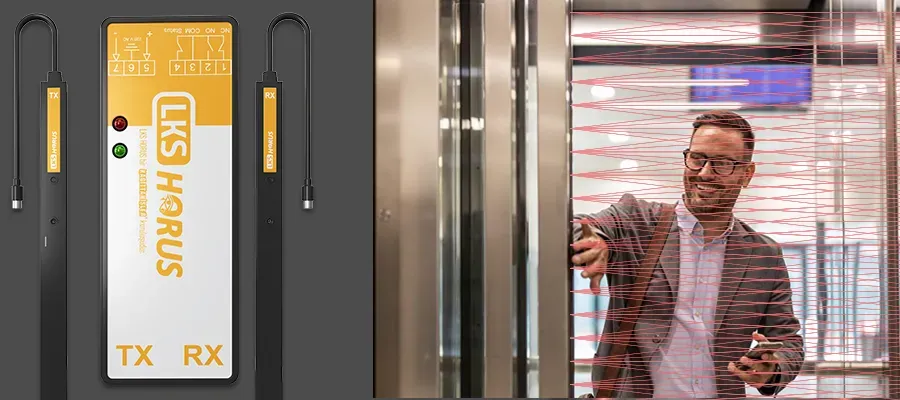
Technically, What Should Be Expected from a Photocell?
For B2B professionals, a "good" photocell does not just mean it works, it means it "works under all conditions". The criteria we look for in systems developed with the Liftkeys engineering approach are as follows:
- EN81-20/70 Compliance: Full compliance with global elevator regulations.
- Environmental Resistance: Error-free (non-blinding) optical scanning against direct sunlight, extreme dust, and shaft dirt.
- Millisecond Response: The ability to send an open command to the door motor in < 50 milliseconds the moment it detects an obstacle.
The Liftkeys Difference: "Zero Fault Calls"
The most complained about issue by maintenance companies in the industry is that simple photocells are affected by dust or sun and put the elevator into "fault mode". The LKS Horus series minimizes these "unnecessary fault logs" with its anodized body structure and special plastic parts that prevent light leakage. This means fewer calls for maintenance companies and uninterrupted service for end users.
If you want to achieve legal compliance in your projects and reduce your maintenance costs, you can contact our technical engineers and get detailed information about LKS Horus systems.
